A name in the margins and what it means to me
I have always been fascinated by the people who exist at the edge of public attention. Their lives are not blank; they are carefully edited, with whole chapters omitted on purpose. When I think of Kineret Karen Ben Yishay Moore I picture a silhouette at the window of a bright room. You can see the outline, the way the light catches a shoulder, but the face remains deliberately turned away. That image is not an accusation. It is an observation about control, about choosing what to let the world consume.
Her marriage, the brief arc of companionship recorded in legal and entertainment annals, is one visible thread. Beyond that, there is the deliberate absence of spectacle. I find that absence more revealing than pages of biography could ever be. It tells me about a person who prefers private life to public narrative. It tells me that not all proximity to fame becomes a story that the world gets to tell.
When private life intersects with public record
I know the basics: a marriage on a symbolic date, a subsequent separation, a divorce filing. Those are factual anchors. They are the points where the private becomes public by necessity. Legal paperwork and public notices have a way of leaving footprints even when the people involved choose otherwise. The law demands names, dates, signatures. That makes the private life legible to anyone with a curious enough eye.
Yet legibility is not the same as exposure. A docket number is not a personality. A caption under a photo is not testimony to a lifestyle. Still, those artifacts matter because they are the scraps historians and reporters use when they try to build a narrative. I imagine Kineret Karen Ben Yishay Moore looking at those scraps and recognizing that they will outlive her intention to remain private. That recognition can be heavy. It can be liberating. It can be both.
The echo of a name in image metadata
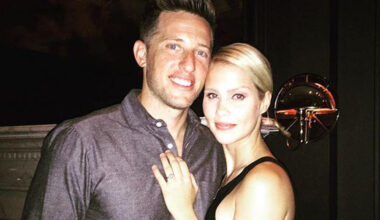
There is another layer where privacy and public record overlap: the metadata that travels with images and with digital archives. Names get attached to frames, captions, and credits. Once a name is encoded in the metadata of an image, it tends to travel. It appears in caption lists, in archival notes, and in automated systems that aggregate content. The name does not always mean presence. It sometimes signals association, or an editor matching a name to a face based on limited information.
I think of the way a library card indexes a life. The card might say where the book was checked out and when. It does not tell you what the reader thought. Metadata is similar. It can indicate that a person was at a certain event, or it can reflect an editor’s best guess. For Kineret Karen Ben Yishay Moore that kind of residual mention is another way the world records her without her choosing to narrate it.
Privacy in the era of private accounts
Being private today often means living behind a private account. The paradox is delicious and cruel. An account signals presence in the social sphere while simultaneously asserting a boundary. I have seen people who refuse interviews yet maintain a minimal social footprint strictly limited to close friends and family. That choice reshapes how we understand presence.
For someone like Kineret Karen Ben Yishay Moore, a private social space would be a fortress. It is a place where ordinary life persists without headline friction. It is where a person might post a small victory, a garden photograph, a recipe, or nothing at all. That lack of public output frustrates those who seek fuller stories. It delights those who cherish discretion.
The cultural demand for access and its costs
I write from a cultural context that treats proximity to a celebrity as an invitation to narrate every moment. That demand is noisy and persistent. It converts spouses, friends, and partners into side characters in a story they never asked to join. The pressure to explain, to capitalize, to monetize is constant. Many people drift into that pressure reluctantly. Others resist with deliberate silence.
I respect the resistance. Silence is a form of speech. For Kineret Karen Ben Yishay Moore, choosing silence may be a statement about autonomy in a world built to snack on personal detail. It may also be an emotional defense. Whatever the motive, a life kept private forces us to invent fewer details and to confront our hunger for story. It asks us to accept that not every human life yields to public appetite.
The legal document as a private chronicle
When I read court filings or dockets I am aware that they are not biography. They are instruments of law. They reduce relationships to declarations and boxes checked. The personal nuance vanishes under formal language. That flattening can feel violent because it misrepresents complexity.
Still, legal records matter. They are public by design and they can reveal elements that other channels do not. For someone like Kineret Karen Ben Yishay Moore those records encapsulate a specific moment. They are not a verdict on character. They are an administrative footprint. In my view they remind us of how public systems capture private transitions without offering any of the tenderness those transitions actually contain.
The ethics of writing about the private adjacent
I admit I feel a responsibility when I write about people who have not asked for the spotlight. The impulse to clarify, to contextualize, to hypothesize is human. But it is also potentially invasive. I try to balance curiosity with respect. I try to treat the visible traces of a life as evidence and not as permission to speculate wildly.
When I write about Kineret Karen Ben Yishay Moore I imagine a life that is not reducible to a marriage record or an index entry. I imagine someone navigating ordinary days away from the cameras, negotiating relationships, making choices, and living with the consequences. That imagination is not a claim. It is an exercise in empathy.
FAQ
Who is Kineret Karen Ben Yishay Moore?
I see her as a person whose public visibility centers on a marriage that entered the legal record. Beyond that there is a deliberate privacy that complicates any attempt to assemble a fuller biography.
When did her marriage take place?
The marriage is publicly recorded as occurring on January 1, 2009. That date is a concrete marker in the arc of what became public.
Was there a legal separation or filing?
Yes. There is a recorded separation and subsequent filing in the year 2011. Those filings are legal instruments and serve as public markers of a private transition.
Does she have a public professional profile?
I find no extensive public record of a professional career presented under her full name. That absence does not equal inactivity. It suggests private life or work conducted away from the spotlight.
Why does her name still appear in media records?
Names can persist in media records through captions, credits, and metadata. Those traces often remain long after an event. They function like echoes in an archive.